India is no longer just a market with high potential; it is one full of opportunity, vigour, and optimism. With the digital economy going mainstream, with over twelve million business registrations and foreign investments exceeding a trillion dollars, the shift in momentum is palpable.
To gain clarity on the Indian market entry strategy, there are Indian government websites that provide clarity for first-time businesses. They bring together verified policy frameworks, registrations, incentives, licensing procedures, and real time regulatory updates in a unified digital ecosystem. Instead of piecing together information from secondary sources, investors can build strategies based on authenticated information from the validated sources.
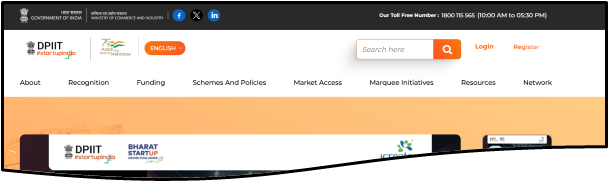
1. Startup India (startupindia.gov.in)
Startup India functions as India’s official gateway for innovation-led businesses and startup development. For foreign investors, the platform offers insight into where innovation is happening and how the government supports emerging ventures across industries. It brings together policies, incentives, and programs in one accessible space.
It also functions as a bridge between global investors and Indian founders by offering access to incubation networks, accelerator programs, pitch events, and government supported funding schemes. Foreign businesses looking to set up R&D operations or establish innovation partnerships in India can use the platform to track new technologies, find credible partners, and understand the policy environment for emerging sectors such as AI, clean energy, biotechnology, fintech, and advanced manufacturing.
What do foreign companies in India gain:
A simple introduction to India’s startup ecosystem and investment environment
Guidance on obtaining DPIIT status to access official benefits
Listings of government-backed innovation centres and programs
Current tenders related to startups and innovation partnerships
Regulatory guidance and policy insights for business planning
2. MSME Portal (msme.gov.in)
The MSME portal supports one of India’s strongest economic pillars. Over six hundred thousand MSMEs operate across manufacturing, services, and exports, and they serve as critical partners for foreign companies entering the Indian market. For international businesses, the portal helps simplify the process of identifying potential suppliers, contract manufacturers, and local production partners.
The platform also explains government backed schemes such as the Self-Reliant India Funds, Credit Guarantee Fund Trusts, and ZED quality certification programs. These initiatives support quality improvement, technology upgradation, and market expansion, which directly benefit foreign companies that depend on reliable supply chains.
Key advantages for foreign investors:
Detailed insights into MSME incentives and export support programs
Information on cluster development, which is valuable for building local supplier networks
Guidance on technology adoption schemes that enhance production efficiency
Access to resources that help foreign companies integrate with rural or regional manufacturers
Updates on reforms that influence procurement, credit access, and industry standards
The Udyam Registration portal is India’s digital gateway for formally classifying MSMEs. For foreign owned subsidiaries that meet MSME criteria, Udyam status opens access to incentives, credit support, and preferential procurement. This is especially relevant for companies that wish to establish cost effective production units, back offices, or innovation centres.
The portal reduces administrative complexity by providing instant digital registration, automated classification, and easy access to government notifications. Foreign investors planning long term operations in India, this is essential for building predictable cost structures and accessing priority lending programs.
What do foreign companies in India gain:
Immediate recognition as an MSME for those that qualify
Access to priority lending and government backed credit guarantees
Entry into cluster development programs that promote supplier and partner networks
Eligibility for capital subsidies and technology upgradation schemes
Regular updates on MSME regulations that support risk free compliance
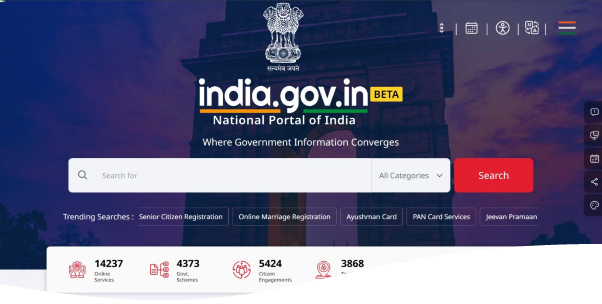
4. National Portal of India (india.gov.in)
The National Portal of India is the official entry point into the country’s governance system. For foreign companies, the portal operates as a reliable directory for ministries, regulatory agencies, policy departments, and sectoral authorities.
It is particularly useful for investment teams conducting due diligence or researching regulatory responsibilities. With verified circulars, notifications, and updated procedural guidelines, the portal provides clarity and eliminates misinformation risks that often arise from unverified commercial sites.
What foreign companies in India gain:
Access to official circulars, rules, and policy documents
Links to ministries relevant for approvals, licensing, or compliance
Databases of public procurement opportunities and e auction announcements
Tools for identifying regional authorities and contact points
5. Ministry of Corporate Affairs (MCA) (mca.gov.in)
The MCA portal is a foundational platform for all companies operating in India, including foreign subsidiaries, branch offices, and joint ventures. It manages incorporation, filings, and statutory compliance.
For global businesses, the platform offers complete visibility into company law requirements and ensures that foreign directors and compliance officers can manage filings remotely. With a digital first structure, MCA reduces the need for physical documentation and provides transparency in approval processes.
What foreign companies in India gain:
End to end incorporation services through SPICe+
Digital filing of statutory forms required for foreign entities
Clear timelines for mandatory filings to avoid penalties
Online support materials and helpdesk services
Access to a centralised system for document verification
6. DPIIT Portal (dpiit.gov.in)
The DPIIT portal is a strategic tool for any investor entering India. It provides detailed sectoral policies, FDI regulations, and approval procedures. The platform also hosts the Foreign Investment Facilitation Portal, which handles government approvals for sectors that are not under the automatic route.
For foreign companies evaluating market entry or expansion, the portal provides clarity on investment limits, ownership rules, technology restrictions, and compliance requirements. This is essential for developing a legally sound investment strategy.
What foreign companies in India gain:
Sector wise FDI regulations with clear caps and conditions
Submission tools for proposals requiring government approval
Press notes that outline policy changes and regulatory updates
Data on approved projects and inflow statistics
Notifications on new incentives and investment related reforms
7. DGFT Portal (dgft.gov.in)
The DGFT portal is critical for any foreign business involved in import or export activities. It simplifies licensing, enables online submissions, and provides access to the Foreign Trade Policy.
For companies operating supply chains, the portal supports planning by providing detailed product wise trade regulations, incentive structures, export obligations, and updated compliance rules.
What foreign companies in India gain:
Electronic applications for IEC and other trade licenses
Real time status updates and digital helpdesk support
Sector specific notifications that guide import and export decisions
Access to trade data useful for competitive analysis and forecasting
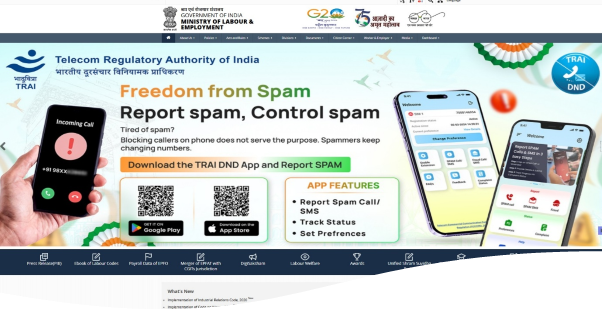
8. Ministry of Labour and Employment (labour.gov.in)
Foreign companies entering India need to understand labour laws, welfare obligations, and social security requirements. This portal serves as a central reference for all such rules and provides access to mandatory registrations.
What foreign companies in India gain:
ESI, EPFO, and labour related registration processes
Guidance on onboarding local staff or expatriates
Notifications on changes in workplace compliance requirements
Additional Platforms Worth Exploring
Beyond the main platforms, a few more government portals offer helpful data, policy guidance, and collaboration opportunities. These tools support foreign teams seeking a more comprehensive view of India’s business environment.
1. DGTR Portal (dgtr.gov.in)
DGTR oversees trade remedy investigations. For exporters, manufacturers, and trading companies, keeping track of DGTR notifications is essential for evaluating pricing risk, import duties, and the competitive landscape.
What foreign companies in India gain:
Real time updates on anti-dumping and safeguard investigations
Access to investigation reports and evidence requirements
Online tools for filing responses and participating in consultations
2. Ministry of Finance and GST Council (finmin.nic.in, gstcouncil.gov.in)
These portals are essential for understanding tax implications, GST rules, and fiscal policy updates. International companies can use these platforms to model pricing strategies, tax obligations, and supply chain costs accurately.
What foreign companies in India gain:
Access to official GST laws, circulars, and notifications
Checklists for compliance and rate change updates
Tools for resolving tax queries and managing grievances
3. Atal Innovation Mission (AIM) (aim.gov.in)
AIM promotes innovation driven entrepreneurship and is a valuable platform for foreign companies interested in research partnerships, new technology development, or collaboration with Indian institutions.
What foreign companies in India gain:
Directories of incubators and innovation centres across India
Participation opportunities in co-development programs and innovation challenges
Guidance on IP compliant technology exchange and partnership agreements
4. DGS&D (Directorate General of Supplies and Disposals)
DGS&D manages standardized procurement systems for government entities. For foreign suppliers, this portal provides a transparent entry point into India’s public procurement ecosystem.
What foreign companies in India gain:
Supplier registration guidelines for participation in government tenders
Digital tender announcements and procurement policies
Verification tools for documentation and bidding processes
5. DGCI&S (Directorate General of Commercial Intelligence and Statistics)
DGCI&S provides trade and shipment data that supports investment decisions and market research. This is particularly valuable for companies analysing demand patterns, logistics efficiency, or commodity performance.
What foreign companies in India gain:
Access to trade and commodity statistics
Shipment data for supply chain benchmarking
Analytical reports useful for strategy development
6. NewGen IEDC (Innovation and Entrepreneurship Development Centre)
This initiative supports university level entrepreneurship and early-stage innovation. It is a useful resource for foreign companies interested in partnerships with academic institutions or emerging technology ventures.
What foreign companies in India gain:
Collaboration opportunities with research driven startups
Access to incubation programs and funding structures
Opportunities for innovation partnerships in growth sectors
Navigating Indian Regulations Like Professionals
For companies in Europe and the UK, expanding into India requires access to accurate regulatory information, reliable compliance tools, and dependable institutional resources. India’s digital governance ecosystem helps global investors plan operations with confidence by offering clarity, transparency, and structured access to official data. As highlighted in several government publications, the country’s expanding digital frameworks are designed to reduce ambiguity and create a predictable environment for foreign businesses. By using these portals strategically, investors can establish a strong foundation for compliance, operational stability, and sustainable long-term growth in India.