



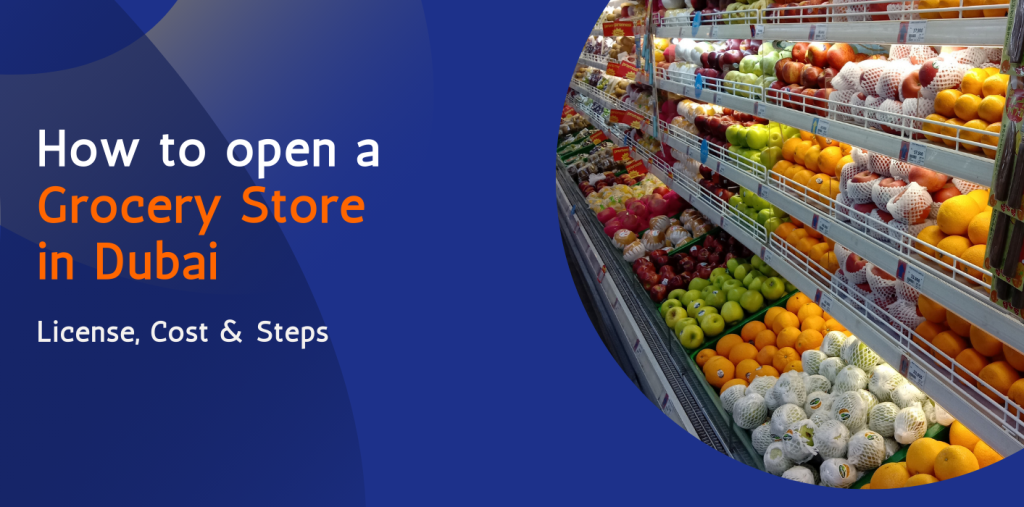
Entering Dubai’s food retail market seems easy, but licenses, municipal approvals, and costs can stop entrepreneurs in their tracks. For UK investors and international business owners interested in the UAE’s flourishing market, the task is more than just opening a grocery store in Dubai; it’s also about navigating the regulatory landscape and managing cash efficiently.
Dubai’s food retail business hit USD 38 billion in 2025 and is expected to grow steadily through 2026, driven by sustained population growth and year-round customer demand.
Unlike discretionary shopping, groceries are a necessary expense that is consistent across economic cycles. With over 3,000 grocery stores serving varied populations throughout the UAE, the industry has demonstrated income potential for those who execute well.
This blog covers licensing rules, setup, documentation, timeline, and costs for opening a grocery store in Dubai in 2026.
What are the benefits of opening a grocery store in Dubai?
Dubai’s grocery market offers strong opportunities for investors who understand the local market.
1. People always need food, no matter the economic situation
The population of Dubai is 11.3 million and foreigners constitute about 89% of its which means there is constant demand for different grocery products. There are always new residential buildings under construction, and every building requires easy access to grocery shops.
2. Dubai’s tax laws also help maximize profits
There is no personal income tax. Corporate profits exceeding AED 375,000 are taxed at a rate of just 9%, while earnings below that amount are not subject to tax. VAT is just 5%, one of the lowest in the world.
3. The city’s location
Dubai is situated between Asia, Europe, and Africa and boasts world-class ports like Jebel Ali, importing products from anywhere in the world is easier than ever. The logistics infrastructure is highly supportive of smooth supply chain management.
4. Setting up a business is straightforward
The UAE government has simplified registration and offers over 40 free zones with easier rules. Now, foreign investors can own 100% of their mainland companies, without needing local sponsors.
Note: The grocery stores in good locations can see quick profits. Stores in residential areas can generate an annual income of 10-20%, depending on their size, location, and management. Quick inventory turnover and loyal customers contribute to a steady cash flow.
What license does a grocery store in Dubai require?
A commercial trade license, issued by the Department of Economy and Tourism (DET) in Dubai, is required to operate a grocery store. This business license allows the trading of food items, home essentials, and daily necessities.
After obtaining a general trading license, all grocery stores must obtain approval from the Food Safety Department of Dubai Municipality. With this document, one can be assured that all medical standards for handling food items are met. Grocery stores selling perishable goods such as vegetables, milk, frozen foods, or meat will need additional food safety licenses.
Required licenses and approvals for opening a grocery business in Dubai, include:
- Commercial trade license from DED/DET
- Dubai Municipality Food Safety Department approval
- Civil Defence fire safety clearance
- Food Control Permit for perishable goods
- Ejari (registered tenancy contract)
The activity code 4711003 for grocery stores is categorised under the Consumer Stores Group. The license is valid for one year and must be renewed annually to continue legal operation.
What documents are required for opening a grocery store?
The Dubai authorities require specific documents at different stages for opening a grocery store in the UAE.
Personal identification documents:
- Valid passport copies of all shareholders and directors
- UAE residence visa copies (if applicable)
- Emirates ID for UAE residents
- Passport-size photographs
Business formation documents:
- Trade name reservation certificate from DED
- Initial approval certificate
- Memorandum of Association (MOA) for LLC structures
- Shareholder agreement (if applicable)
Property-related documents:
- Tenancy contract for commercial premises
- Ejari registration (mandatory lease registration)
- Store layout plan approved by Dubai Municipality
- No Objection Certificate (NOC) from the landlord
Regulatory approvals:
- Dubai Municipality Food Safety approval certificate
- Civil Defence fire safety clearance
- Food Control Permit (for perishable goods)
- Import permits (if selling imported products)
Entering the UAE Food Industry?
Get Our UAE Food Industry Guide
Download Free Guide ↗How to open a grocery store in Dubai?
The process of opening a grocery store in Dubai starts with creating a business plan. This plan should specify the type of store, such as a small neighbourhood convenience shop, a specialty organic store, or a discount supermarket.
Step 1: Choose the business structure and jurisdiction
Mainland companies (licensed by DED) can sell directly to consumers anywhere in Dubai. Free zone companies enjoy 100% foreign ownership and simplified regulations but face restrictions on local market sales. Most grocery stores targeting residential customers select mainland registration.
Step 2: Reserve the trade name
Submit three trade name options to DED for approval. Names must reflect the business nature, avoid offensive or religious references, and remain unique. DED approves one name based on availability.
Step 3: Obtain initial approval
You will have to take your proposed business, and or initial documentation to the DED for approval of business operations.
This step is crucial because it gives you the initial approval to operate your business under UAE law. Also, there will be a violation fee of AED 245 that you will need to pay.
Step 4: Finding Commercial Space / Lease and Register through Ejari
It would be best to find a location near where people live, as well as have good access to parking, and sign a lease. You must comply with all Dubai Municipal Zoning Laws and the Tenancy Registration System, Ejari, for your business. Ejari will validate your lease contract and enable you to obtain a business license.
Step 5: Dubai Municipal Approval
To get approval from Dubai Municipality, submit copies of the Tenancy Agreement, the Trading Name Certificate, and the Store Layout Plan to the Food Safety Department. Inspectors from Dubai Municipality will carry out an inspection.
Step 6: Finalise the Memorandum of Association
The MOA should be prepared to clearly define the business structure, shareholder rights, and operations. It must be notarized and added to the official company records.
Step 7: Pay licensing fees and receive the license
All approved documents are to be submitted to DED along with a payment for commercial license fees. Furthermore, foreign investors are also required to pay a Local Service Agent agreement fee.
Upon completion, DED issues the trade license certificate, MOA, and establishment card.
Step 8: Complete post-licensing requirements
Open a corporate bank account in Dubai with your trade license and company documents. Apply for investor and employee visas.
What does opening a grocery store in Dubai cost?
The estimated cost structure for opening a grocery store in Dubai divide into licensing fees, setup costs, and operational capital:
| Licensing and Registration Costs | Cost (AED)* |
|---|---|
| Initial approval fee | 245 |
| Trade name reservation | 620 |
| Local Service Agent (LSA) agreement (one-time) | 540 |
| DED commercial license payment voucher (annual) | 11,000 |
| Dubai Municipality approval fees | 2,000 – 5,000 |
| Civil Defence clearance | 1,000 – 2,000 |
| Total licensing costs | 15,000 – 20,000 |
What timeline should business owners expect?
The grocery store setup timeline depends on documentation efficiency and approval processing speeds.
Weeks 1-2: Business planning, jurisdiction selection, and trade name reservation. Initial approval application submission.
Weeks 2-3: Location selection, lease negotiation, and Ejari registration. Preparation of store layout plans.
Weeks 3-5: Dubai Municipality application submission and on-site inspections. This stage often encounters the longest delays if premises require modifications to meet compliance standards.
Weeks 5-6: MOA preparation, final documentation compilation, and licensing fee payment. Trade license issuance.
Weeks 6-8: Corporate bank account opening, VAT registration, visa applications, and store fit-out completion.
Engaging professional business setup consultants in Dubai such as Stratrich Consulting significantly accelerates the process by managing documentation and coordinating with authorities.
Conclusion
For British investors and foreign entrepreneurs, the supermarket industry in Dubai offers a steady way to earn money by helping people buy what they need. To succeed, you need to get the right trading license, approval for food safety from Dubai Municipality, find busy locations with many shoppers, and follow UAE federal rules.
With an investment between AED 260,000 and AED 550,000, this industry can provide ongoing income in one of the most stable retail markets in the Middle East. However, getting a license requires attention to detail. But for those who plan carefully, the benefits include no personal income tax, foreign ownership of up to 100%, and access to 11.3 million consumers, making Dubai’s grocery retail business a really good opportunity.